Specification
Record material, colour, measurements and finish expectations.
Use the agreed specification and sample as the reference for review. Request evidence relevant to the product instead of relying on general quality claims.
Agree the information needed before sample approval.
Record material, colour, measurements and finish expectations.
Request relevant test documents where the brief requires a performance claim.
Keep dated decisions with the accepted physical reference.
Use the agreed specification and physical reference together.

State composition, weight and colour reference. Compare the physical material with the garment it will become.
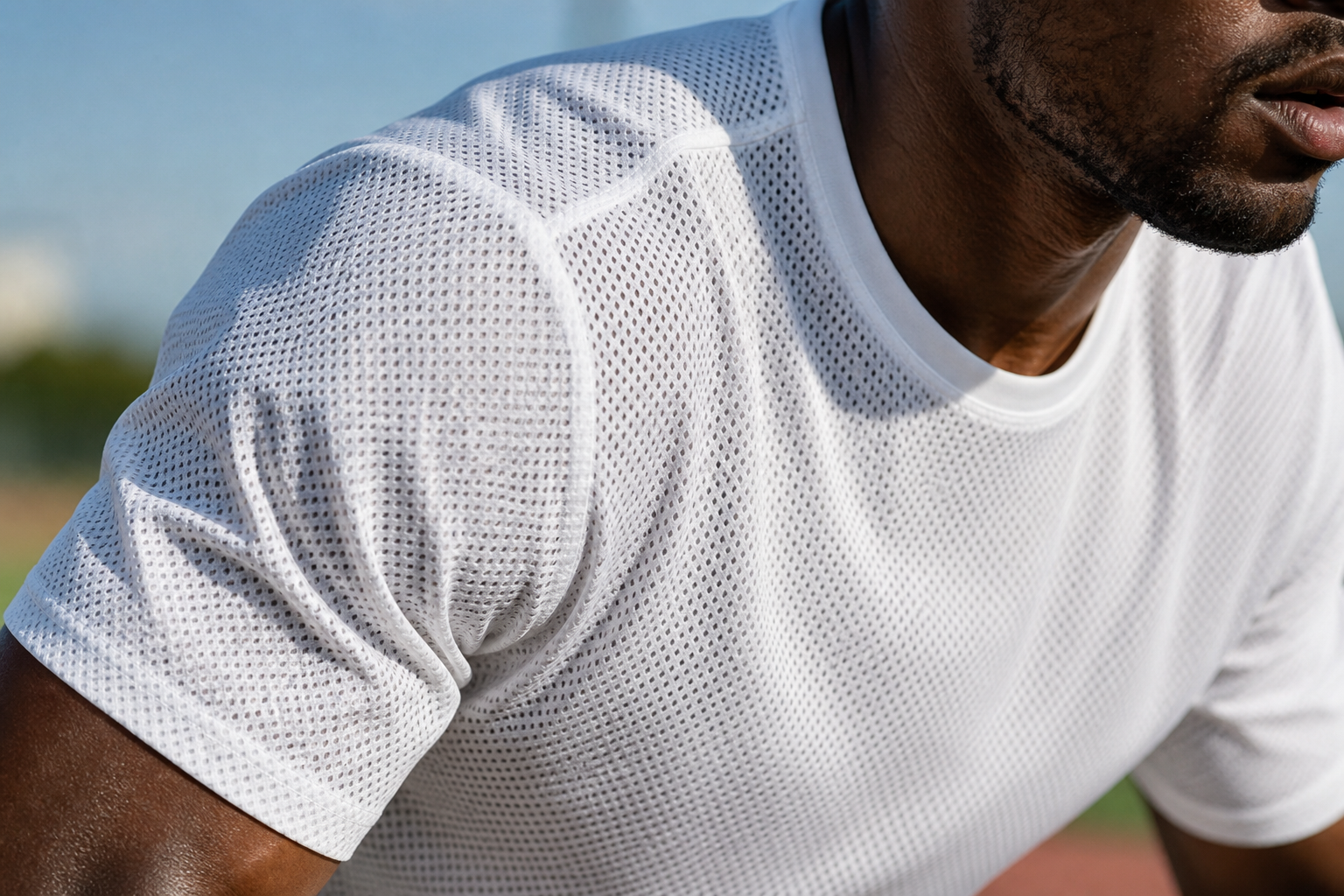
Locate mesh or contrasting panels on the garment drawing. Review coverage and the resulting seam positions.
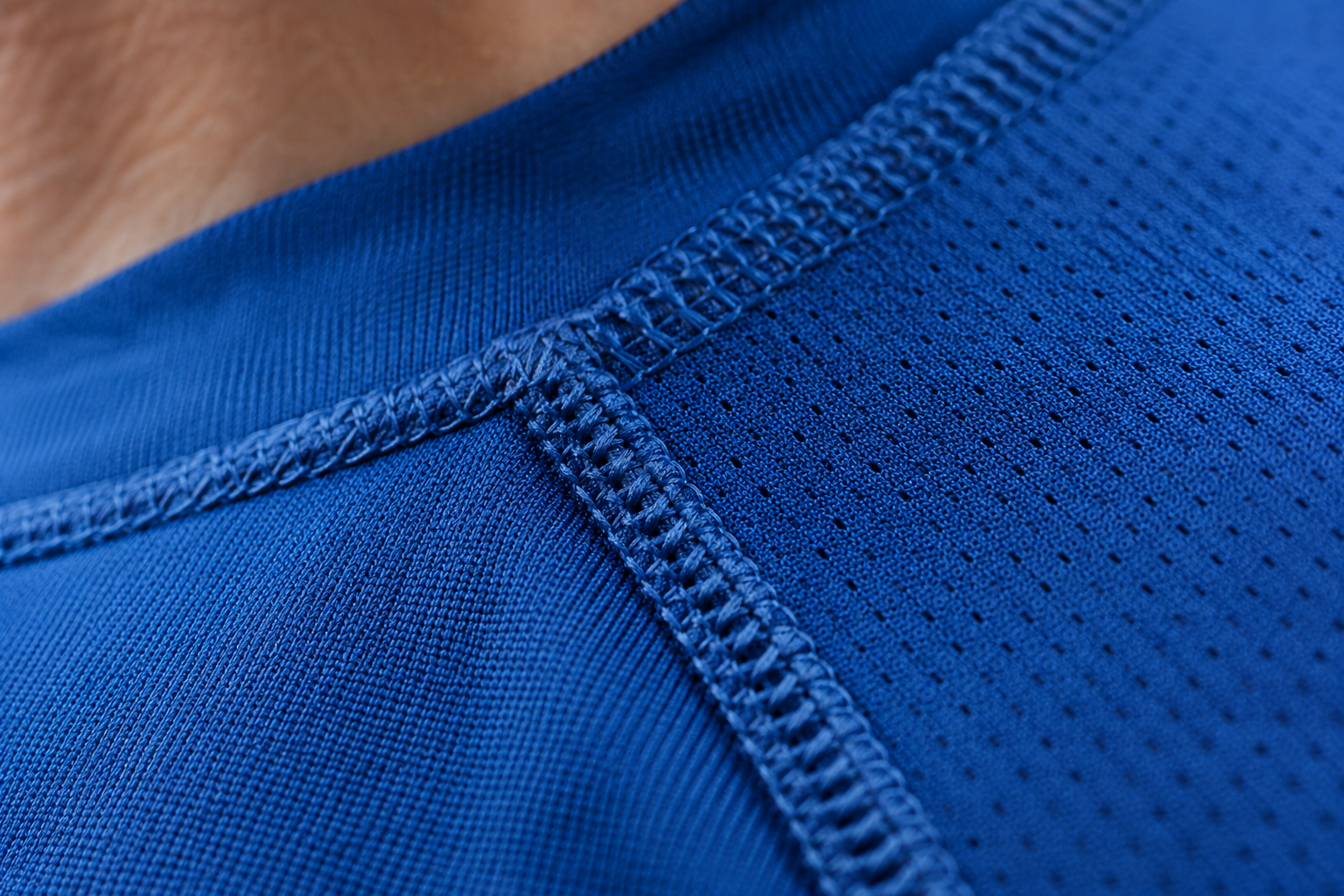
Keep the accepted seam finish with the sample. Check joins, edges and skin-contact points.
Check seam consistency, panel joins and trim placement against the approved garment. Define how corrections will be recorded.
Review the sample against the agreed specification, then record what is approved and what needs to change. Work through these six checkpoints before confirming production.

Record the sample version, review date and agreed corrections. Keep photographs and measurements with the final specification, and identify who can approve changes before production proceeds.

Inspect stitch consistency, seam allowances and reinforcement at stress points. Turn the garment inside out to check loose threads, rough edges and seam bulk against the skin.

Compare colour against the approved physical reference. Confirm crest, sponsor, name and number dimensions and placement. Inspect print edges, embroidery backing and the feel of decoration against the fabric.

Review hand feel, fabric weight and composition against the requested specification. Check opacity under stretch and recovery after movement. Agree any wash or performance testing before bulk production.

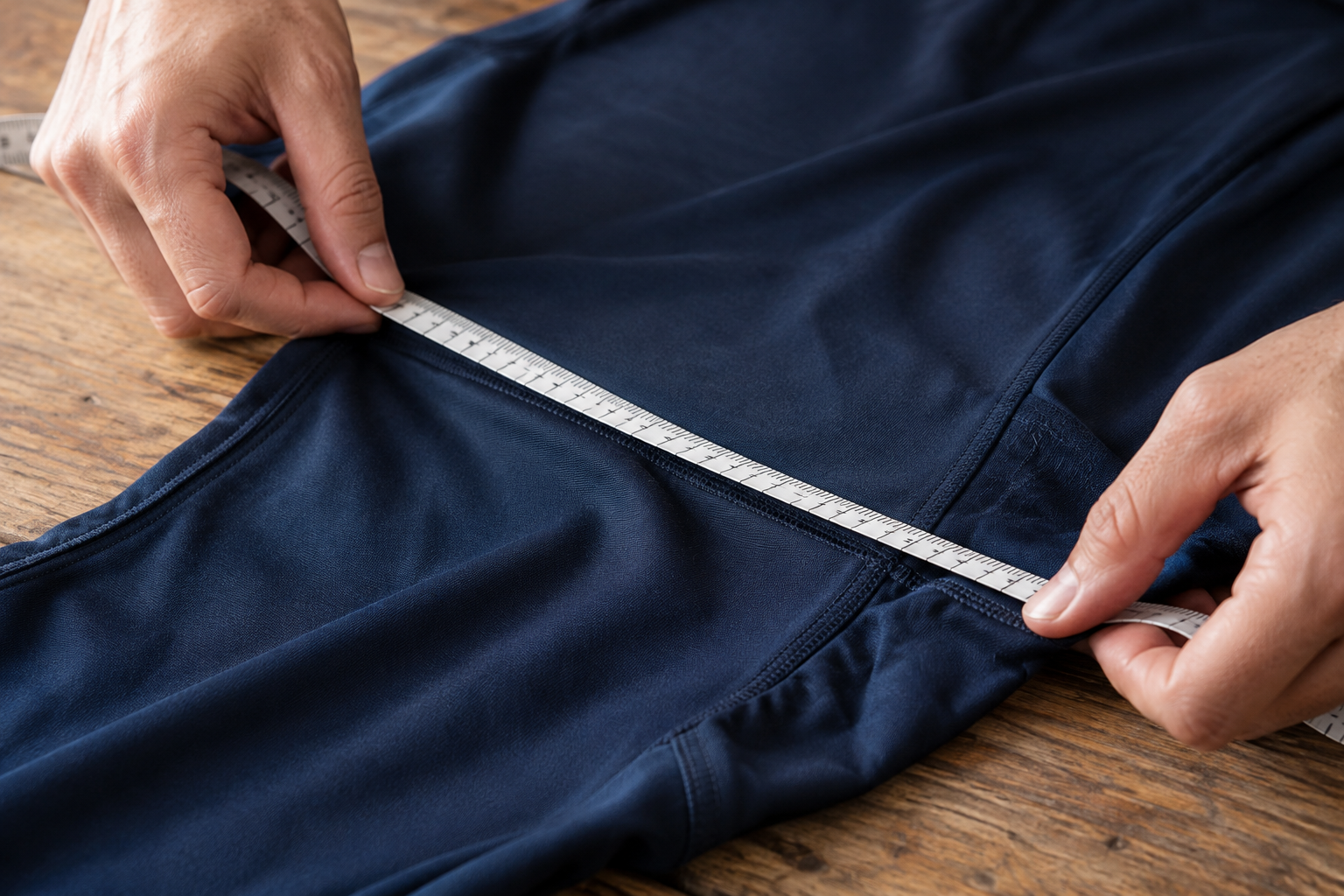
Measure the agreed points on the sample and record any differences from the size chart. Check reach, bending and stride in the intended fit; confirm measurement tolerances with the manufacturer.

Check brand, size and care label content supplied for the order. Confirm folding, individual packing, carton quantities and carton markings, including any buyer-specific packing instructions.
Request current documents for any certification or tested-performance claim. Confirm that the evidence applies to the facility, material or product being quoted; no certification is implied here.
Agree the details that affect your quotation and sample review.
Keep the accepted sample, measurement chart, colour references, artwork files and order quantities together. Identify who approves corrections and record changes before production proceeds.
State the delivery country and area in the USA, Australia or the relevant European country, your target arrival date and packing requirements. Request production timing, freight and delivery responsibilities in writing.
Break your request down by garment, colour and size. Ask for the minimum quantity, unit price, sample cost and any artwork charges against that exact brief; do not assume one minimum applies to every style.
Describe the garments, estimated quantities, destination and decisions you need help with. Include sample and artwork requirements so the brief can be reviewed together.