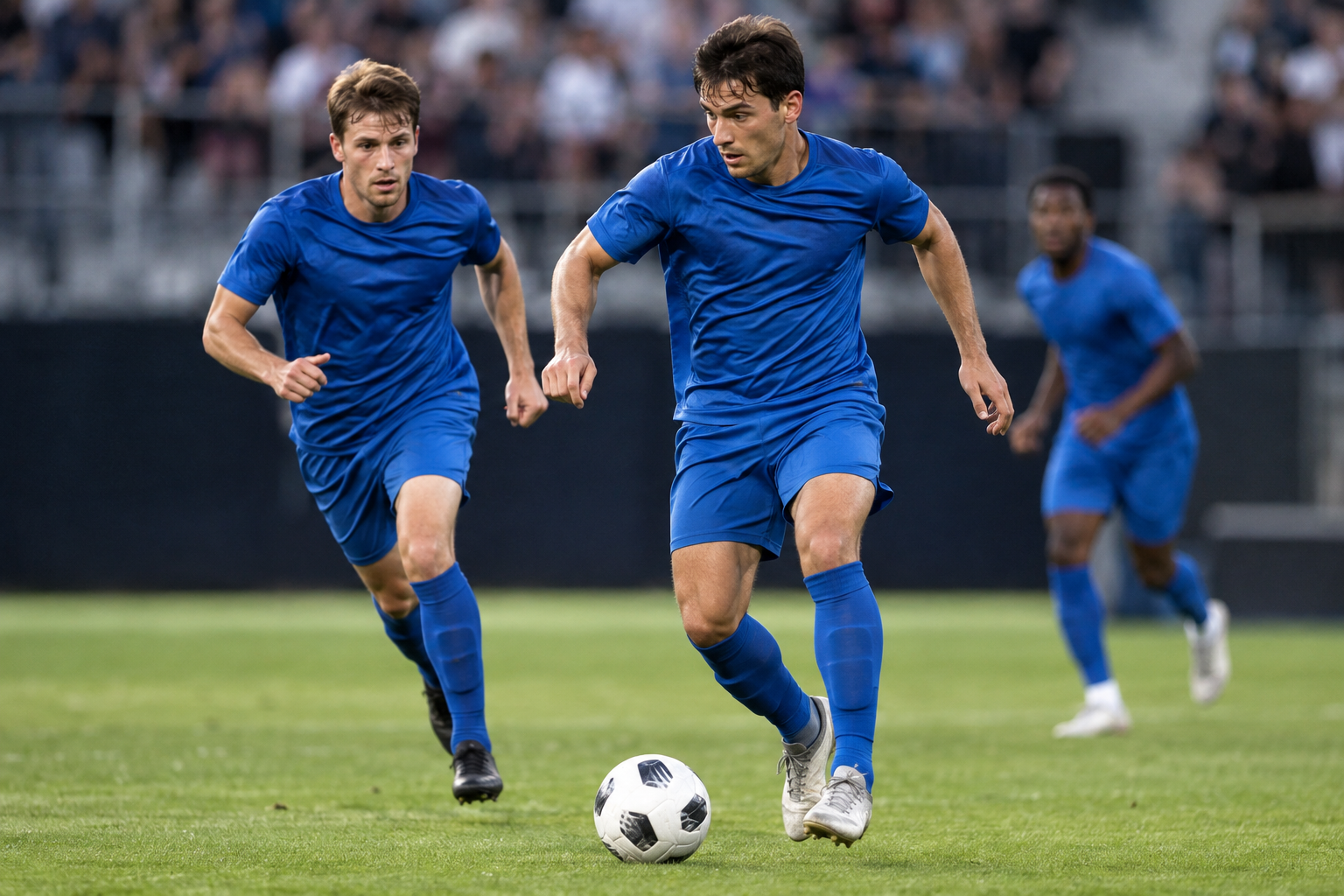
Matchwear
Coordinate jerseys and shorts around the sport, size range and team identity.
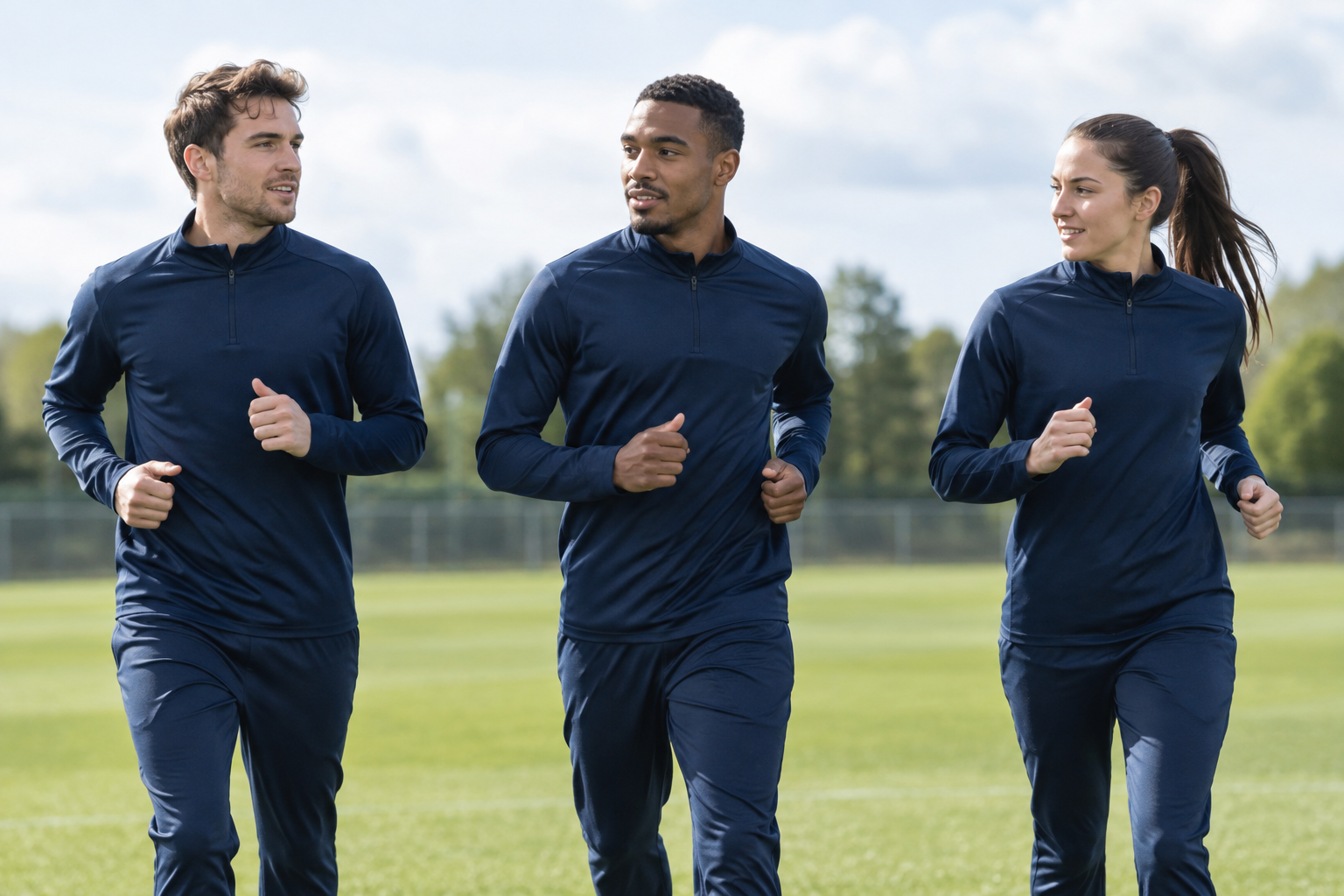
Develop teamwear and sportswear around your garment brief: fabric, fit, decoration and finishing. Start with the products you need and the markets you supply.
Build a focused collection before specifying the details. Use these garment routes to shape your brief.
Coordinate jerseys and shorts around the sport, size range and team identity.
Plan training tops and shorts around movement, fit and layering.
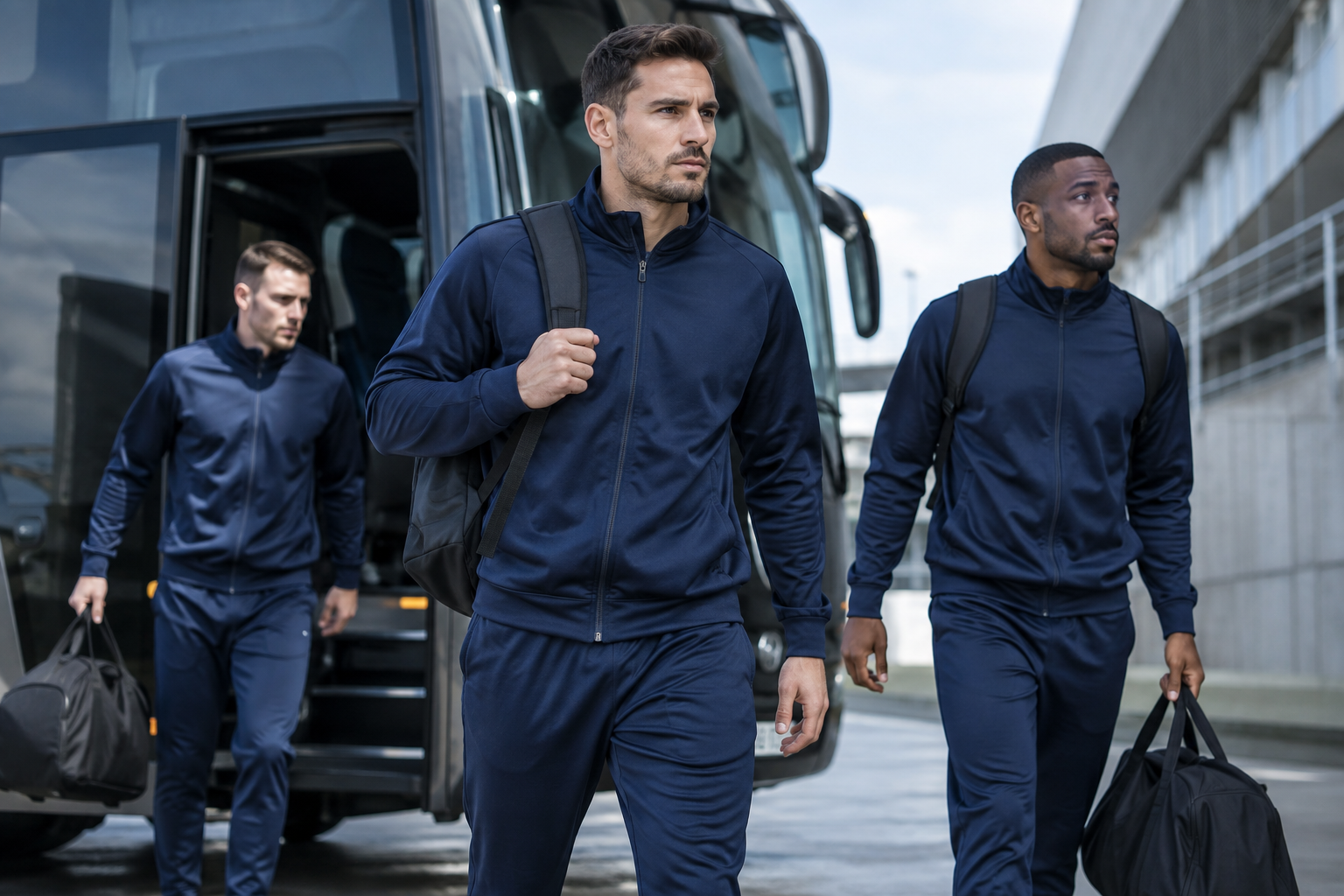
Carry the same identity into warm-ups, sweatshirts and travel pieces.

Define singlets, tees and shorts against the intended use and fit.
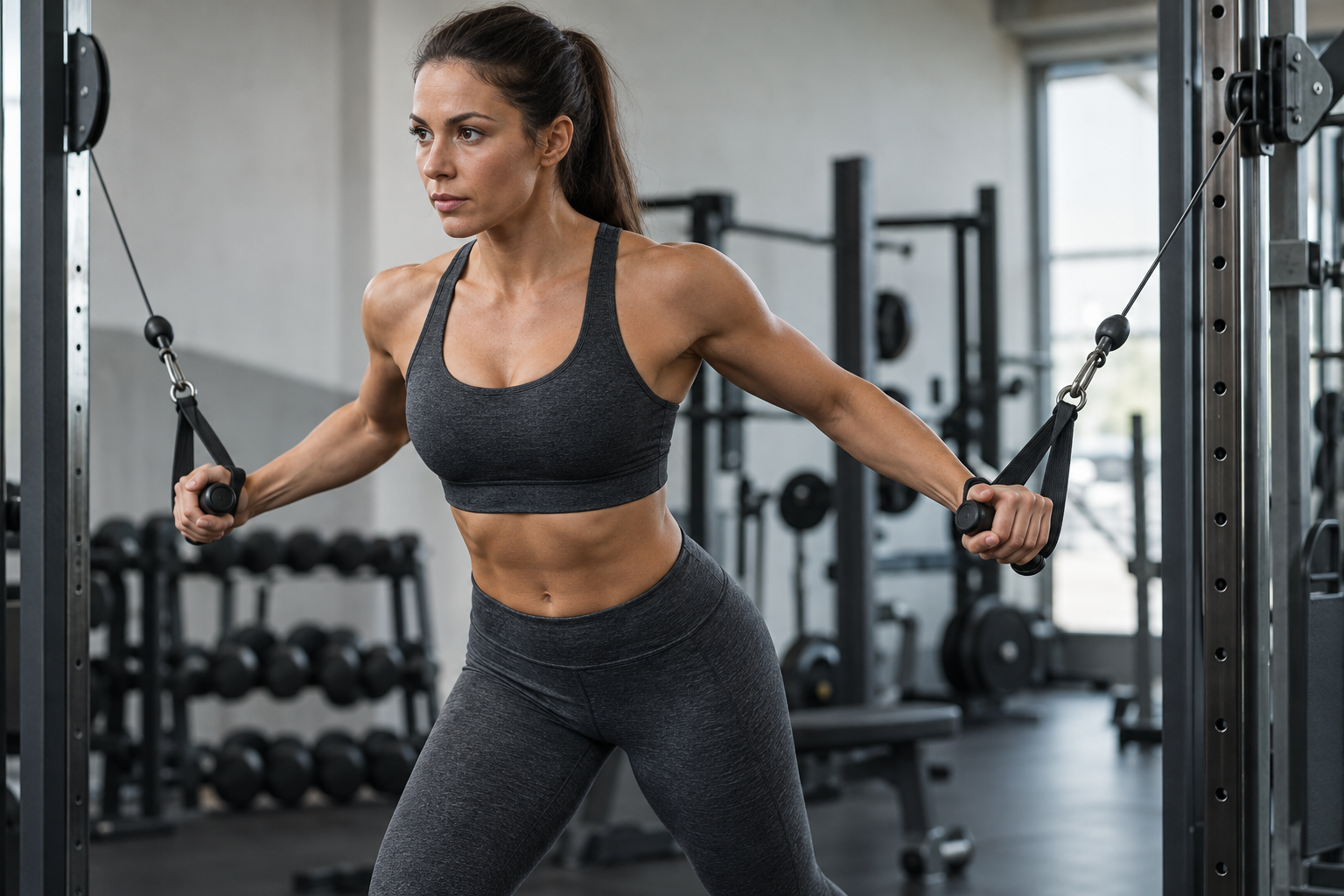
Review garment coverage, seam placement and size progression on a sample.
Work through each decision before sampling. Keep artwork, measurements and material references together.

Provide measurement points, intended fit and the size breakdown. Identify an existing garment reference or the changes your collection needs.
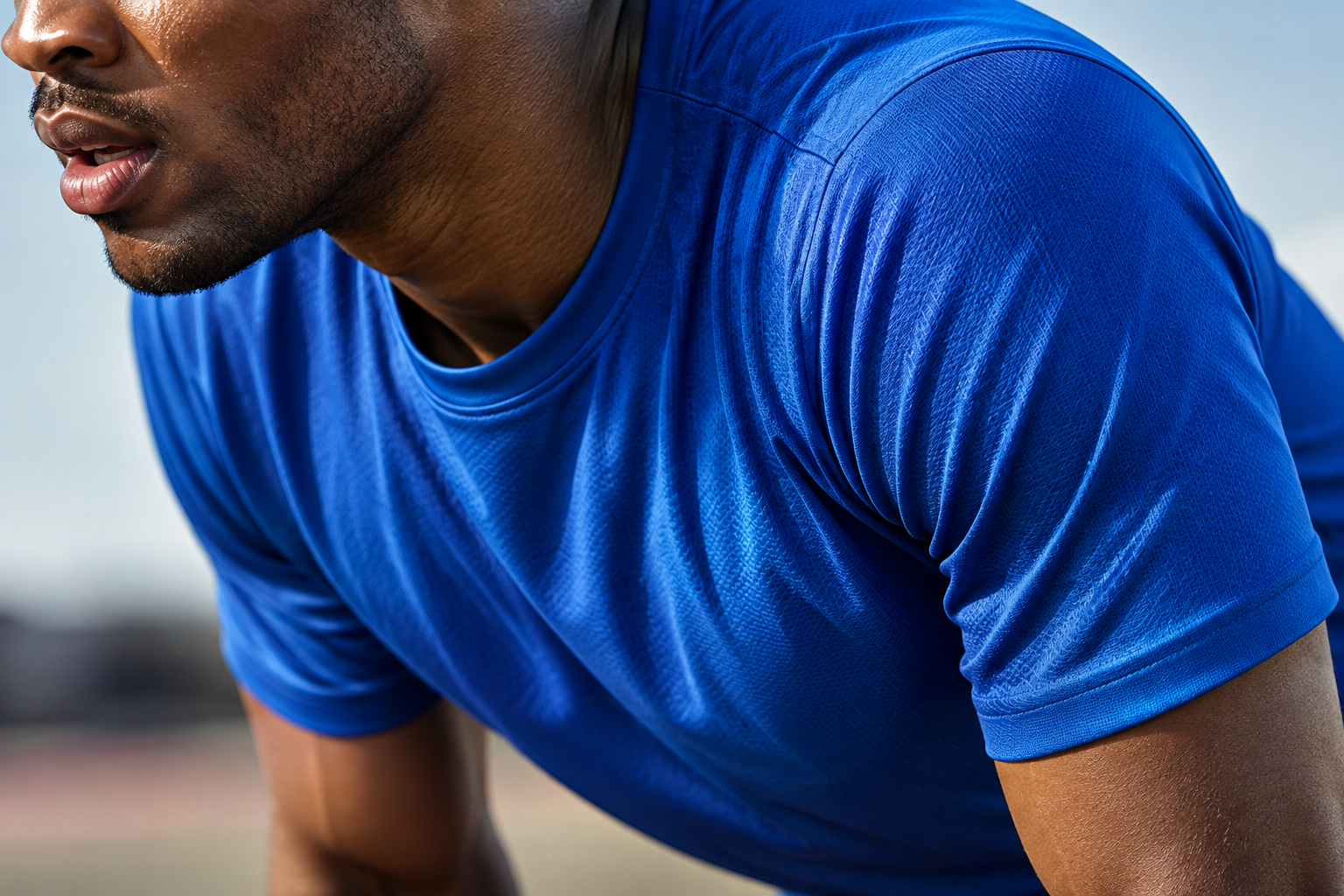
Specify composition, weight and physical colour references. Review coverage, hand feel and stretch on the intended garment.
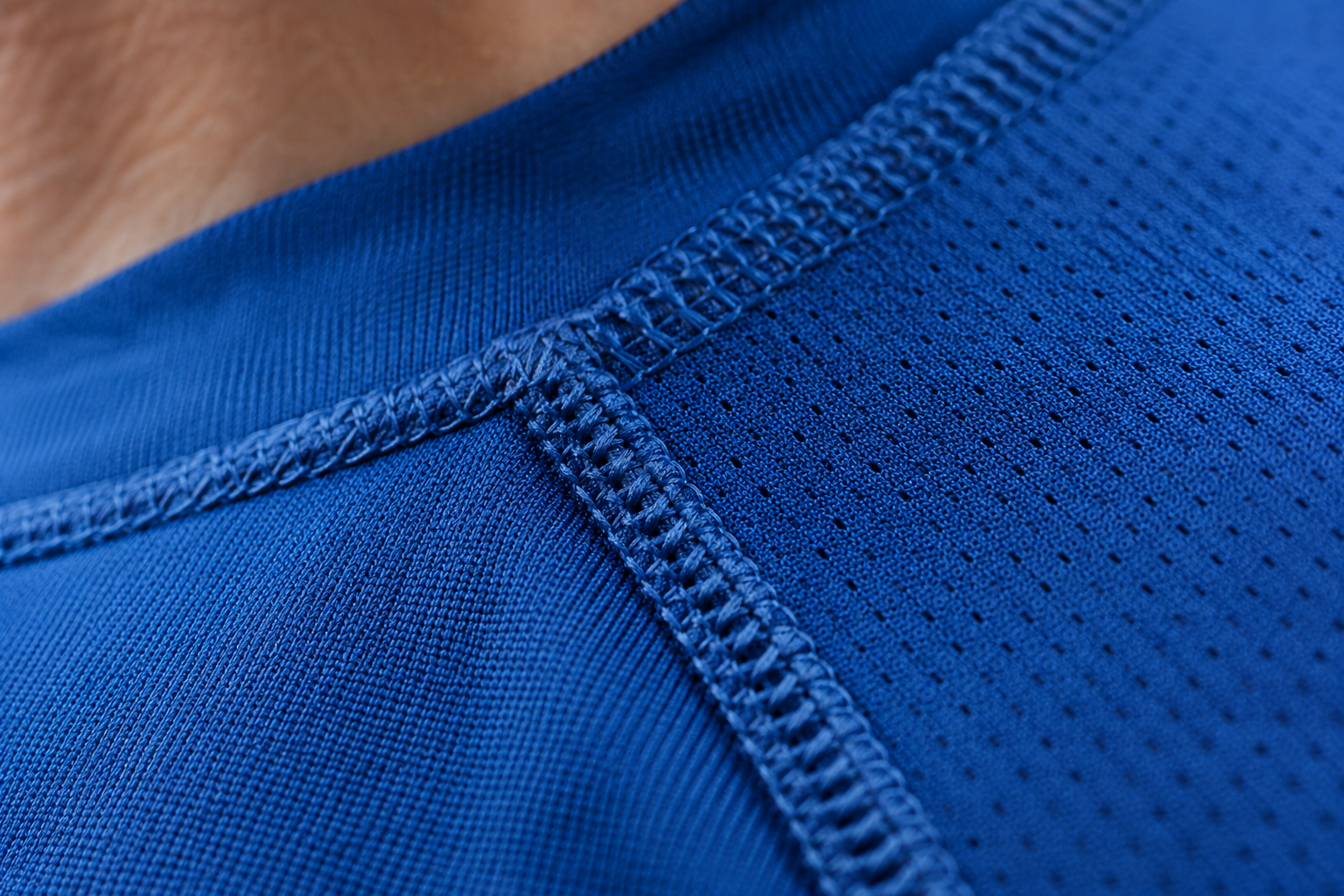
Supply artwork dimensions and positions for the chest, sleeves and other panels. Check each placement against seams and the size range.
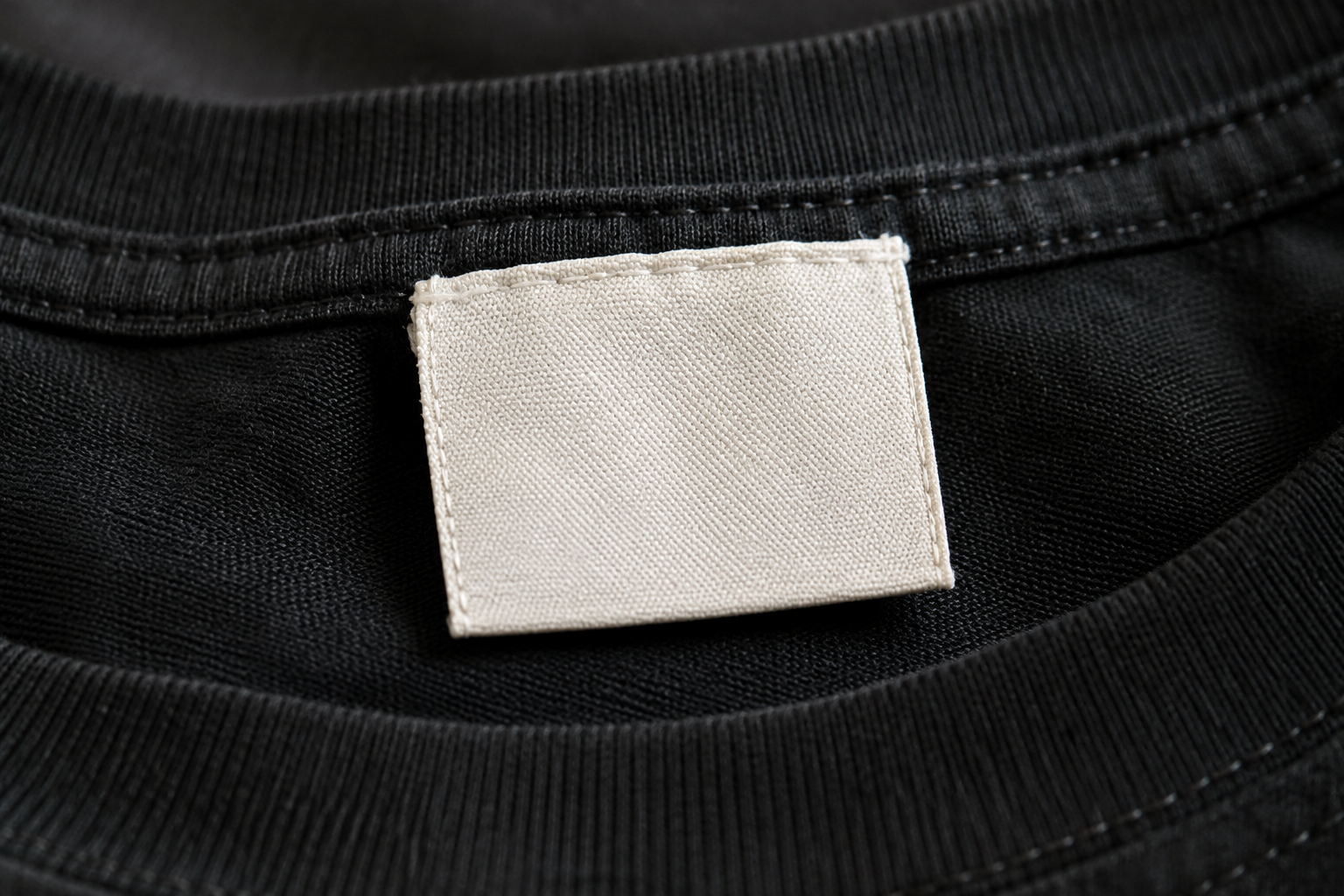
State label content, dimensions and placement, then define folding, size identification and individual packing requirements.
Compare the sample and specification together. Confirm any tested-performance requirements separately.
Specify composition and weight; compare drape and coverage for match and training tops.
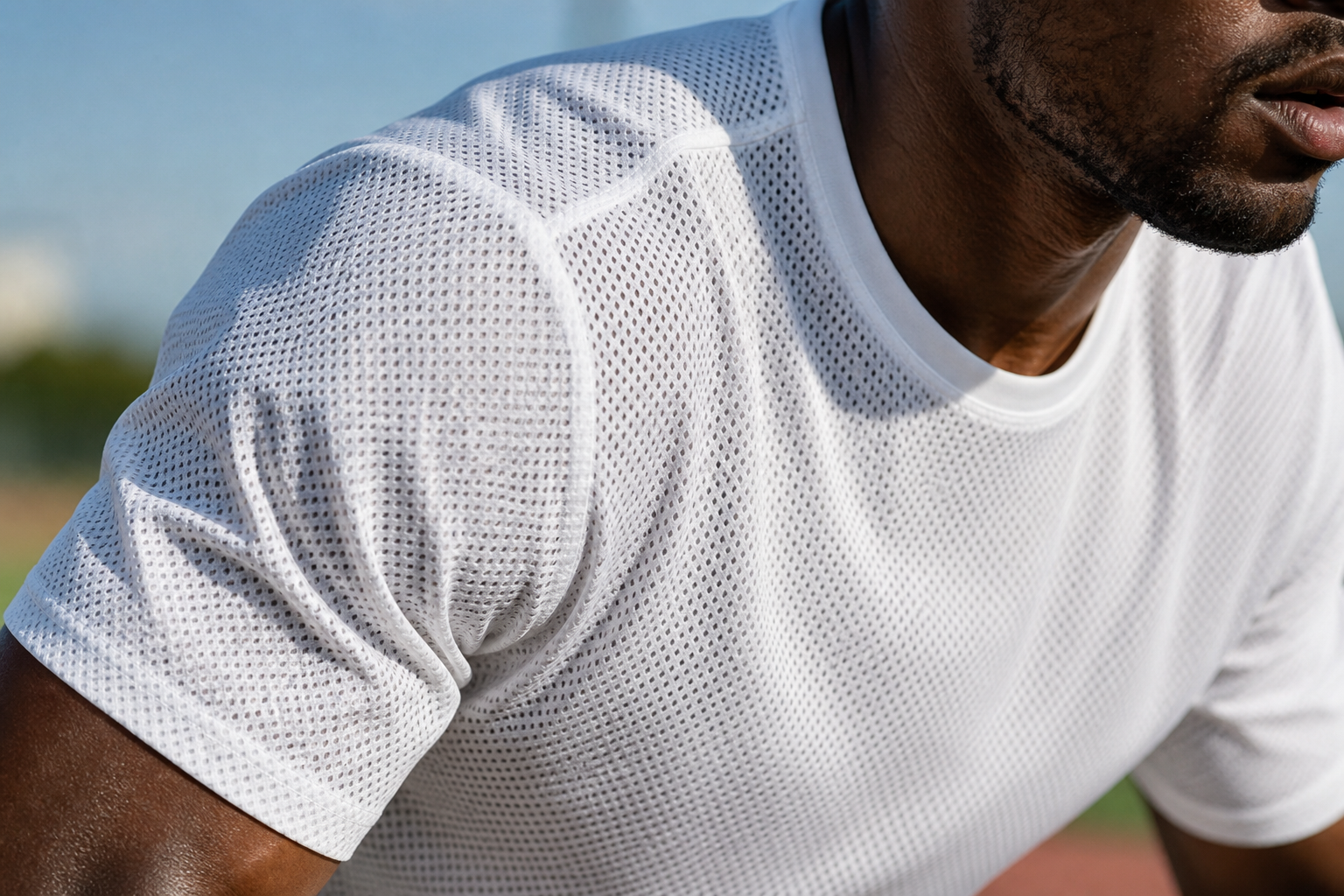
Identify where ventilation panels belong. Review opacity and seam placement on the finished sample.
Match seam finish to movement and skin contact. Inspect both sides of the garment.
Create one schedule for decoration, labels and trims. Confirm method suitability against your chosen material.
Review artwork size, position and colour before approving the decorated sample.
Supply the exact wording, dimensions and placement. Review how the label feels inside the garment.
Identify closures, cords and packing details. Record the approved reference for each item.
Keep each decision attached to the same garment specification. Confirm sample scope and costs before development starts.

Send garment references, quantities, destination and the intended use.

Review materials, construction, decoration and the size specification.

Agree the final specification, commercial terms and delivery plan before production.

Check fit, colour and finishing together. Record changes against the sample.

Confirm packing, shipping documents and the delivery responsibilities agreed in the quotation. Request dispatch details when the order is ready.
Use a physical sample and written specification to review construction, measurements and presentation.
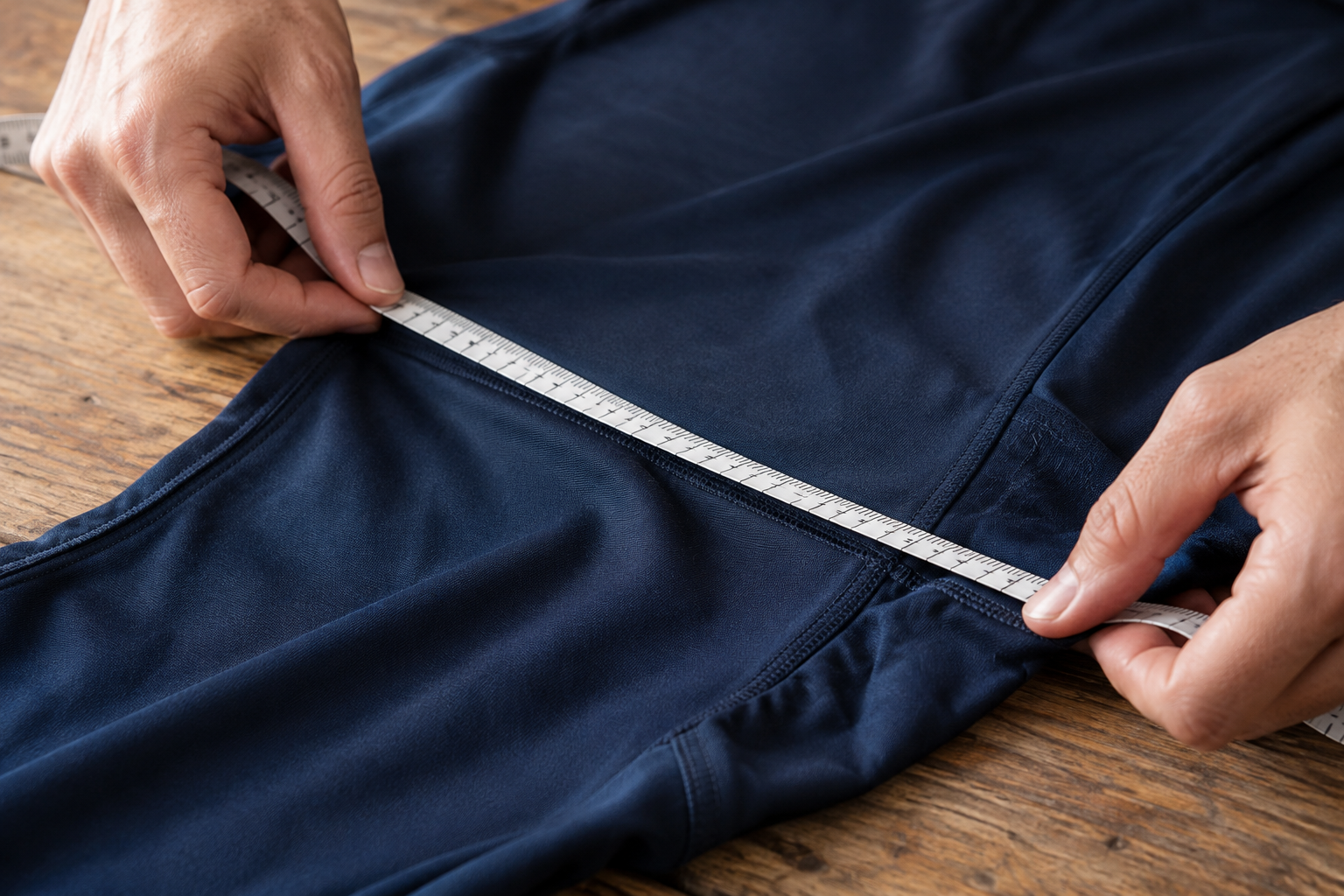
Record the sample version, review date and agreed corrections. Keep photographs and measurements with the final specification, and identify who can approve changes before production proceeds.
Inspect stitch consistency, seam allowances and reinforcement at stress points. Turn the garment inside out to check loose threads, rough edges and seam bulk against the skin.
Compare colour against the approved physical reference. Confirm crest, sponsor, name and number dimensions and placement. Inspect print edges, embroidery backing and the feel of decoration against the fabric.

Review hand feel, fabric weight and composition against the requested specification. Check opacity under stretch and recovery after movement. Agree any wash or performance testing before bulk production.
Measure the agreed points on the sample and record any differences from the size chart. Check reach, bending and stride in the intended fit; confirm measurement tolerances with the manufacturer.

Check brand, size and care label content supplied for the order. Confirm folding, individual packing, carton quantities and carton markings, including any buyer-specific packing instructions.
Make each commercial assumption explicit before committing to production.
List pieces by style, colour and size. Identify opening orders and possible replenishment separately.
Request the sample scope, costs and revision process. Keep one approved specification.
Name the country, delivery area and target date. Confirm freight, duties and responsibilities in the quotation.
Agree the details that affect your quotation and sample review.
Keep the accepted sample, measurement chart, colour references, artwork files and order quantities together. Identify who approves corrections and record changes before production proceeds.
State the delivery country and area in the USA, Australia or the relevant European country, your target arrival date and packing requirements. Request production timing, freight and delivery responsibilities in writing.
Break your request down by garment, colour and size. Ask for the minimum quantity, unit price, sample cost and any artwork charges against that exact brief; do not assume one minimum applies to every style.
Describe the garments, estimated quantities, destination and decisions you need help with. Include sample and artwork requirements so the brief can be reviewed together.